Discovery is useful when it gives a team something concrete to work from. A series of conversations can create context, but the outcome should also help people choose priorities, review a proposed direction, and understand the boundaries of the next stage.
A problem people recognise
Capture the current situation in plain language. Explain who experiences the problem, when it occurs, and what they do today. Include the constraints that shape the work. Someone joining the project should be able to understand the starting point without attending every original meeting.
A prioritised first scope
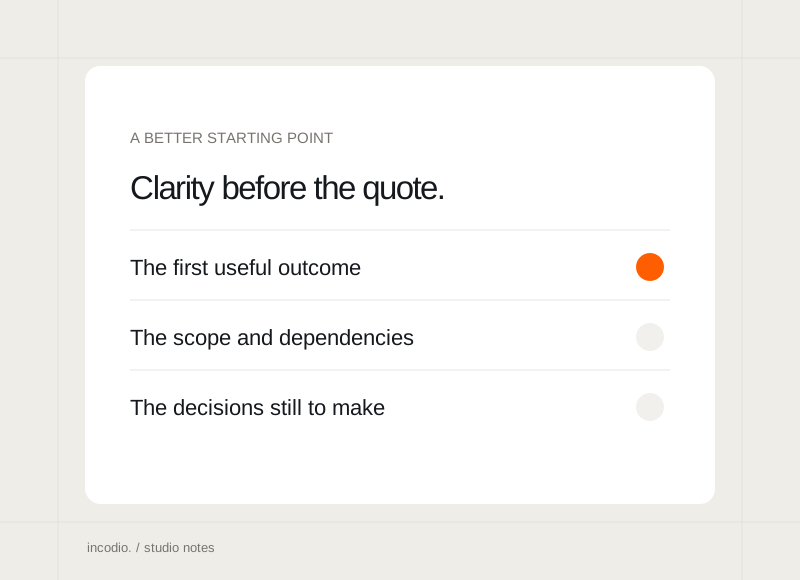
Separate the first useful outcome from later possibilities. Show what is included, what is outside the boundary, and which decisions remain open. A short list of priorities is more useful than a long feature catalogue when a team needs to make a trade-off.
A journey or prototype to review
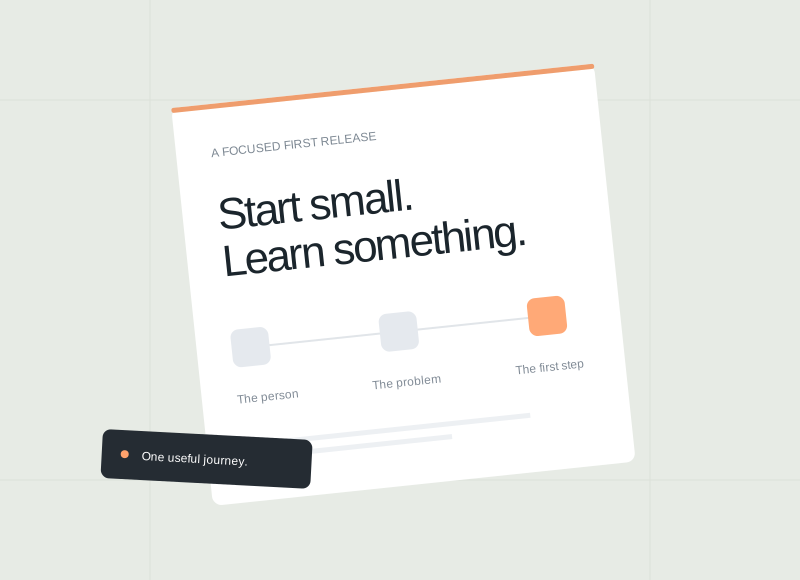
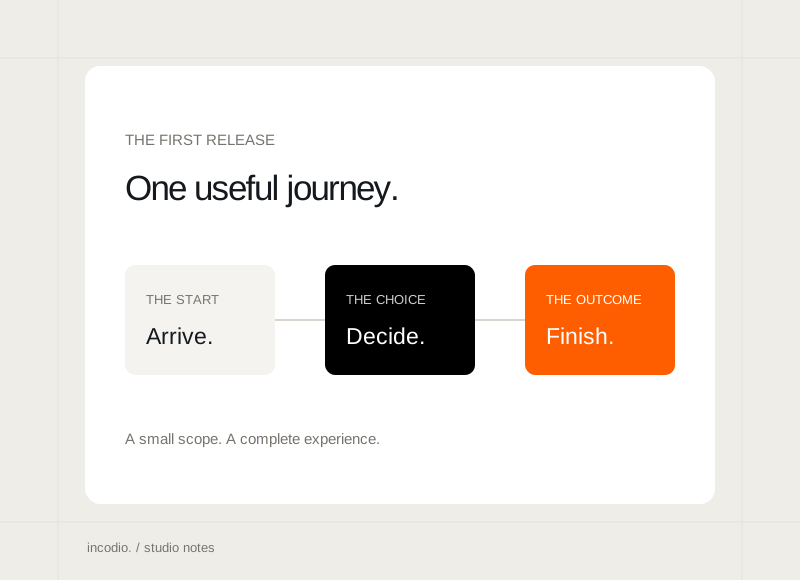
Make the proposed approach tangible. Depending on the question, that might be a flow diagram, rough screens, or a clickable prototype. The output should expose decisions clearly enough for people to discuss the experience, rather than merely agreeing with an abstract description.
A clear next step
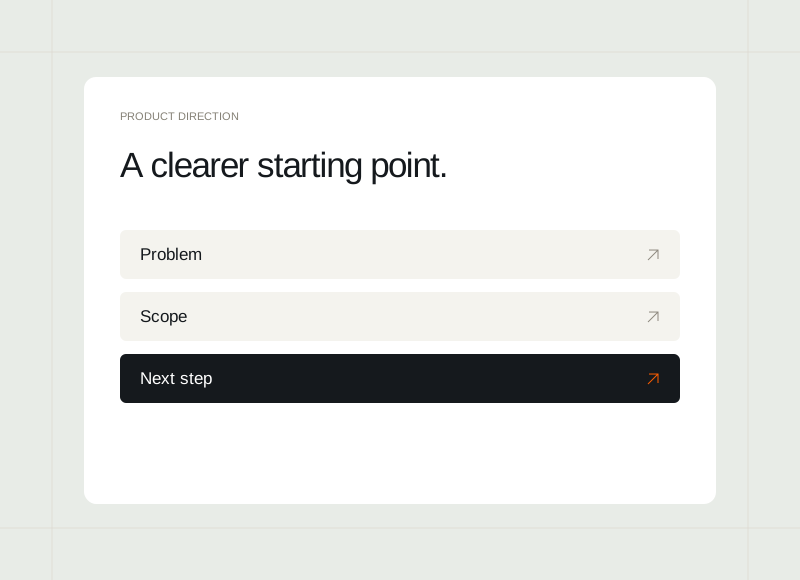
Finish with responsibilities, unresolved questions, and the work proposed for the next stage. Identify assumptions that affect an estimate or schedule. Discovery can reveal that the idea needs to change; a useful outcome makes that possibility understandable rather than treating development as the only acceptable conclusion.