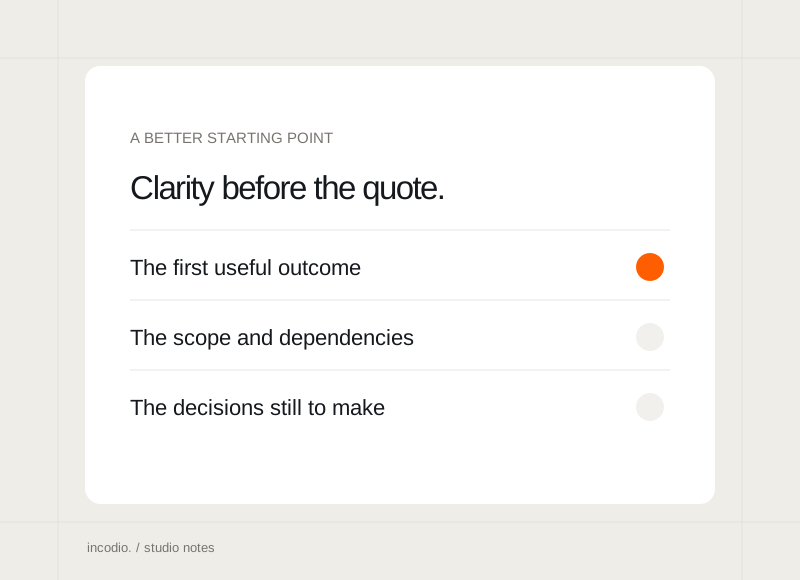
Before you ask for a development estimate.
The details that make an early project conversation more useful, even without a finished brief.

Create a new business platform or bring scattered subscriptions and processes into one custom system. We work out what to build, what to replace, and what should stay connected.
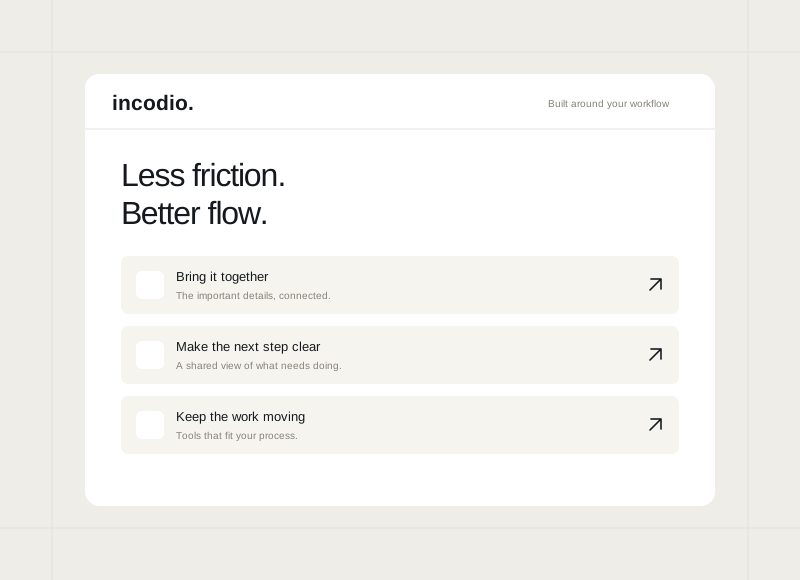
You pay for separate tools, but still move between them to run the business. Custom software can bring selected functions together around what your company actually needs.
Customer management, reporting, and everyday operations live in separate products. Work out which functions your own business platform could replace.
Your team adapts its process to the tools available, then fills the gaps with extra steps. Build the system around your business rules and operational needs.
You want to launch an internal system, a specialised service, or a new way of operating. Custom development lets you define the software around that opportunity.
The request-workspace example shows information, status, and responsibility brought together. Use it to explore the kind of connection your own business software could provide.
Requests arrive in different places. Context gets copied. The next action needs another conversation.
Capture context, review the request, and assign responsibility.
Start with the capabilities the business needs. That may mean a new system from scratch, replacing selected paid tools, or connecting the systems worth keeping.
Create a focused system for the customer or operational functions your business needs most.
More for sole proprietorsDevelop the custom business logic, operational platform, or supporting software behind a new product or service.
More for startupsIdentify overlapping subscriptions and build selected functions into a platform shaped around your team and business.
More for small & medium businessesBuild a defined business system or capability alongside your existing technology, internal teams, and operational responsibilities.
More for enterprisesReview what the company needs, what the current tools provide, and where custom development makes sense. Then design, build, and review the agreed system.
A requirements map covering the business, tools, and priorities.
Review the processes, business rules, tools, and system dependencies.
Share representative work, existing subscriptions, and the capabilities you want to add.
A system plan, proposed replacements, and implementation requirements.
Outline the platform, data flows, integration needs, and ongoing operating requirements.
Review the proposed functions, costs, and responsibilities with the business owners.
Working software and findings from the agreed business-scenario checks.
Implement the platform and check its functions, workflows, and connections.
Try representative scenarios and coordinate feedback from the people using it.
The agreed software, documentation, and operational handover.
Explain operation, system dependencies, and the agreed handover tasks.
Confirm access, maintenance responsibilities, and the team receiving the system.
The details that make an early project conversation more useful, even without a finished brief.
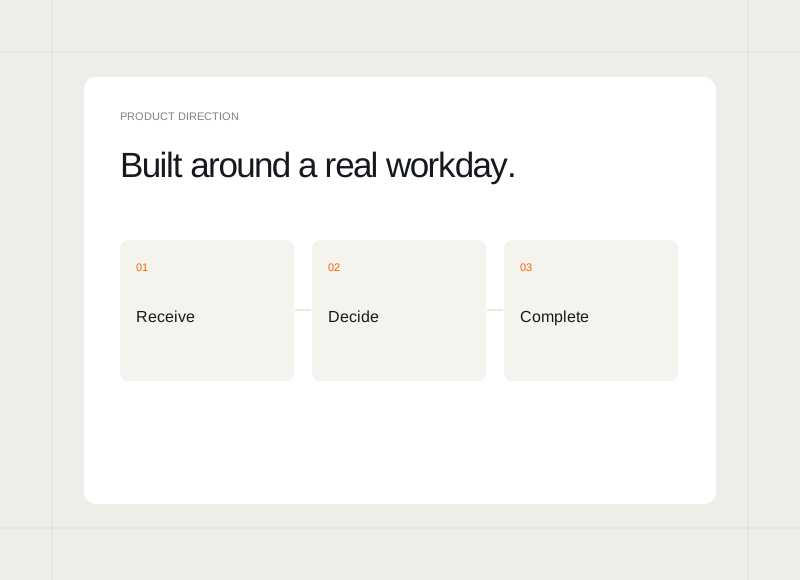
Start with the decisions, handovers, and repeated tasks a team already faces.
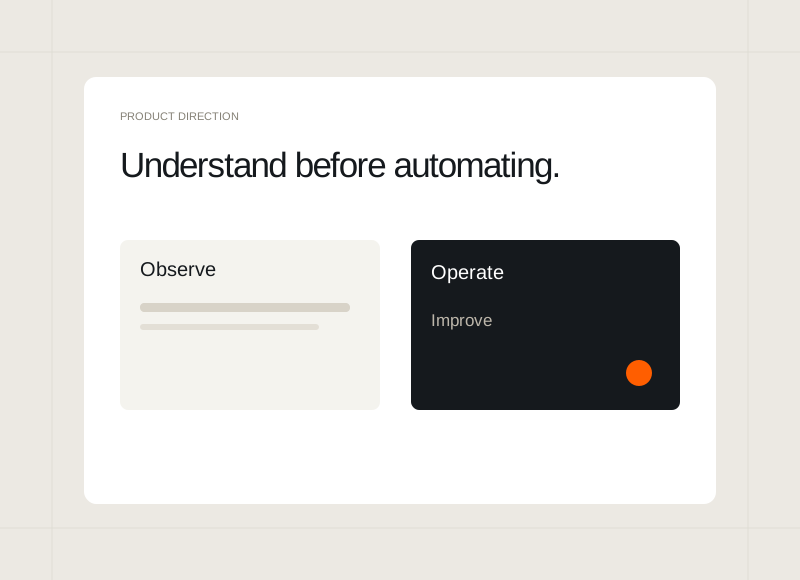
Use early hands-on work to understand what is worth automating.