
One place for the next release.
MVP Development
Build the first version people can use.
Move from a growing feature list to a complete customer task. We connect product direction, design, and development so your first release can reach users and guide the next decision.
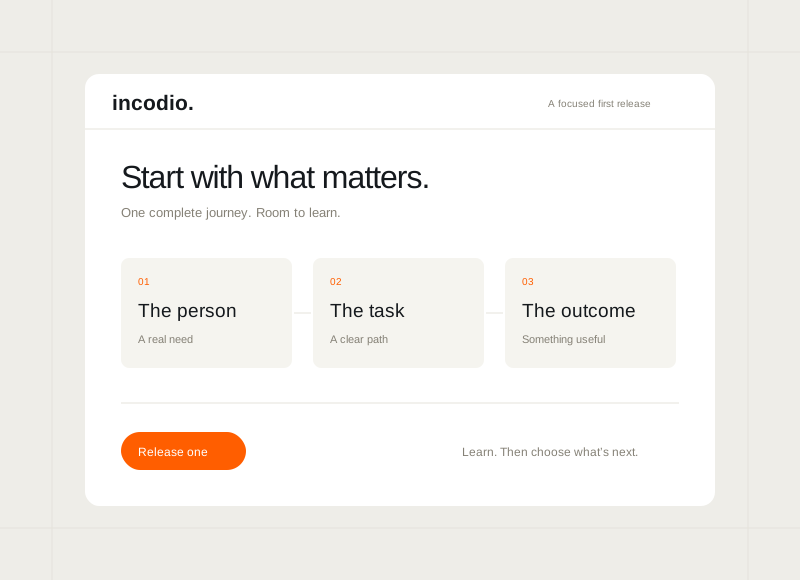
The starting pointWhat's holding up
What's holding up
the first release?
An MVP needs to do something useful for someone specific. Focus the build around that task and the feedback you need next.
How we can help
One complete journey, ready to use.
- Define the user and the first useful outcome
- Connect the essential screens and behaviour
- Review the working product during development
- Prepare the release, handover, and next questions
The feature list keeps moving the launch.
Every new idea feels essential, so the product stays unfinished. Connect release one to a single outcome users can reach.
The screens exist, but the task does not.
Individual features work in isolation while the user journey still has gaps. Prioritise a complete path from start to finish.
The next decision has no user input.
Planning continues without seeing the product in use. Release a useful first version, then learn from how people actually respond.
Explore the experience
See what a complete first journey looks like.
Choose the features in the example, then explore the wireframe, prototype, and working release. Notice what the user can finish at each stage.
Choose the first useful outcome
What belongs in release one?
A first version focused on capture feedback and review a request.
LISTEN. DECIDE. MOVE FORWARD.
Good ideas start here.
Bring the next useful improvement into focus.
Feedback inbox A focused first release
Small releases. Clearer direction.
Start with one useful journey. Learn from what happens next.
Product roadmapOne clear next step
In review
Planned
Ready for the next delivery scope.
Move an idea here when the next step is clear.
Release notesConcept release / 01
A place for better product decisions.
Collect feedback, review a request, and agree what comes next. The first release keeps the loop simple.
Feedback → Review → RoadmapFEEDBACK / CORE JOURNEY
A shared view of what’s next
Keep the next step clear for everyone.
The opportunity
Bring feedback and the next product decision into one shared place.
Wireframe: review the structure before the visual detail.
What we can help with
- Product scope and priorities
- Core user journeys
- A working first release
Where to start
Different starting points. A usable first release.
Whether this is your first product or a new offer within an established business, start with a defined audience and a task worth completing.
For independent businesses
Turn a service idea into a usable product.
Build around one customer task instead of planning an entire platform at once.
More for sole proprietorsWhat the work can include
- A focused product brief
- One complete user journey
- A defined first-release feature set
For founders & early teams
Get the core product in front of users.
Connect the design and build around what early users need to accomplish, then use their feedback to guide the next release.
More for startupsWhat the work can include
- Product priorities and release goals
- Design and build of the core journey
- Release preparation and handover
For growing businesses
Put a new digital offer into use.
Explore a specific customer need with a focused product before expanding it across the business.
More for small & medium businessesWhat the work can include
- A defined audience and first outcome
- A prioritised design and build scope
- A working journey ready for review
For established organisations
Make the pilot useful to its first users.
Build a defined product pilot around a real task, internal requirements, and the decision a wider rollout depends on.
More for enterprisesWhat the work can include
- Pilot goals and review questions
- A defined implementation scope
- Release checks and next-step review
Project delivery roadmap
From the core task to the first release.
Review the intended experience, try the working build, and prepare for users. The next release follows from what you learn.
Relay / 01
You review
A product brief and first-release priorities.
Incodio
Map the core journey and recommend the first feature set.
Your part
Share user evidence, business requirements, and product priorities.
Relay / 02
You review
A prototype and agreed experience direction.
Incodio
Prototype the core task and explain the product decisions.
Your part
Try the journey and bring feedback into one set of decisions.
Relay / 03
You review
A usable build and findings from the agreed checks.
Incodio
Develop the core functionality and check the user journey.
Your part
Test the main task and prioritise feedback for the first release.
Relay / 04
You review
The first release and next learning priorities.
Incodio
Complete release preparation and document handover responsibilities.
Your part
Approve readiness and decide how you will gather user feedback.
Keep reading
Read more on the blog Make the first-release decisions.
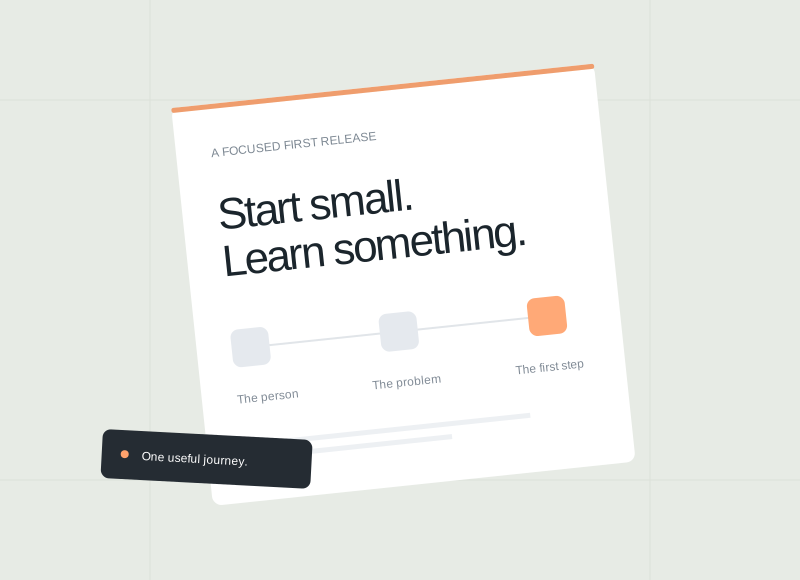
What belongs in your first MVP?
A practical way to separate the essential first release from everything that can wait.
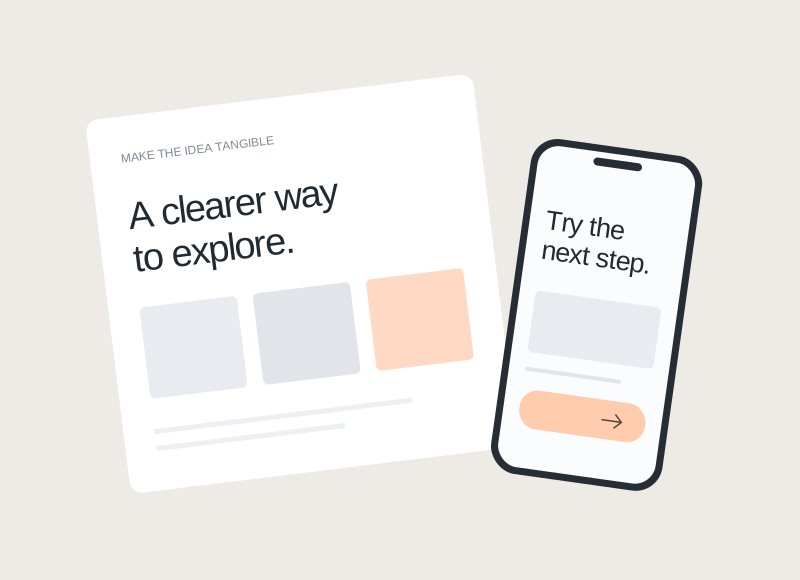
Prototype first, or start the build?
Choose the next step around what you need to learn, rather than how finished the idea looks.
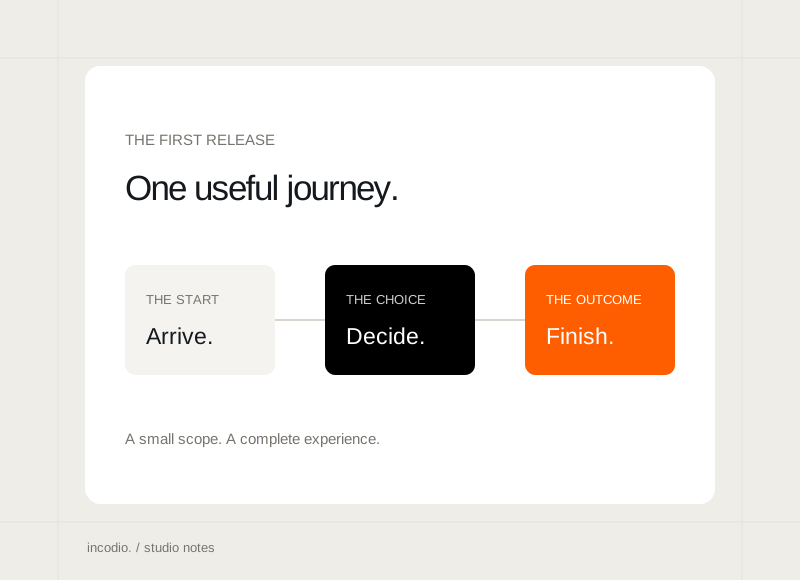
Start with one useful user journey.
Give the first release a clear beginning, a useful outcome, and a sensible finish.