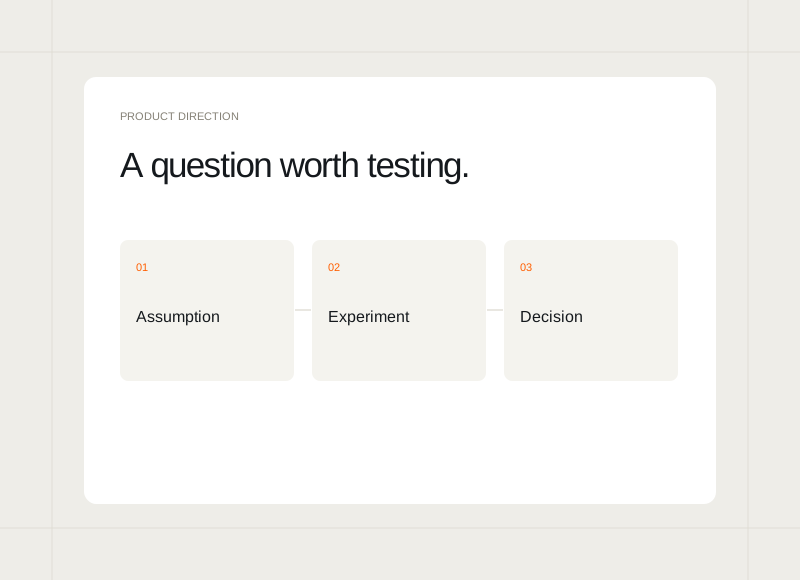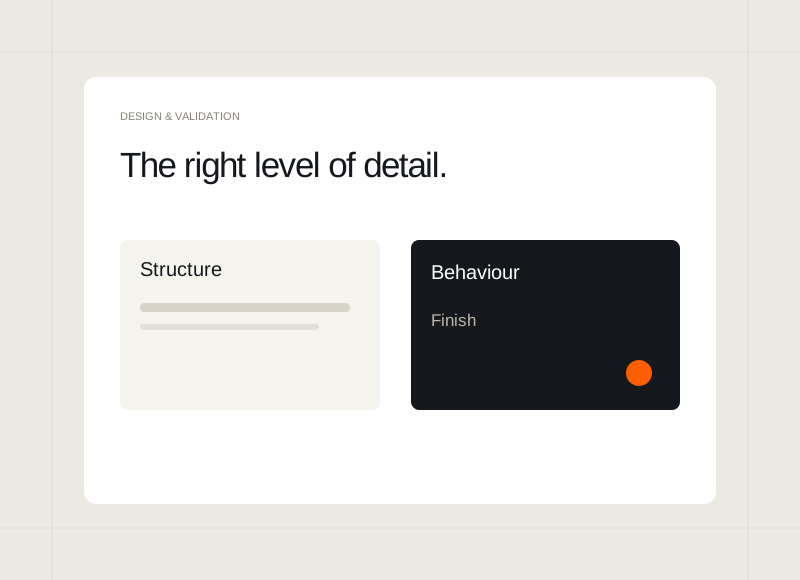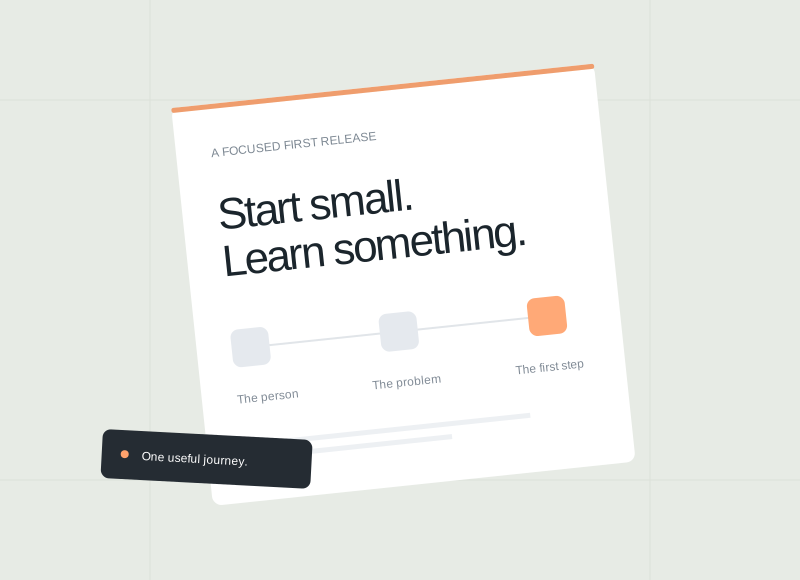
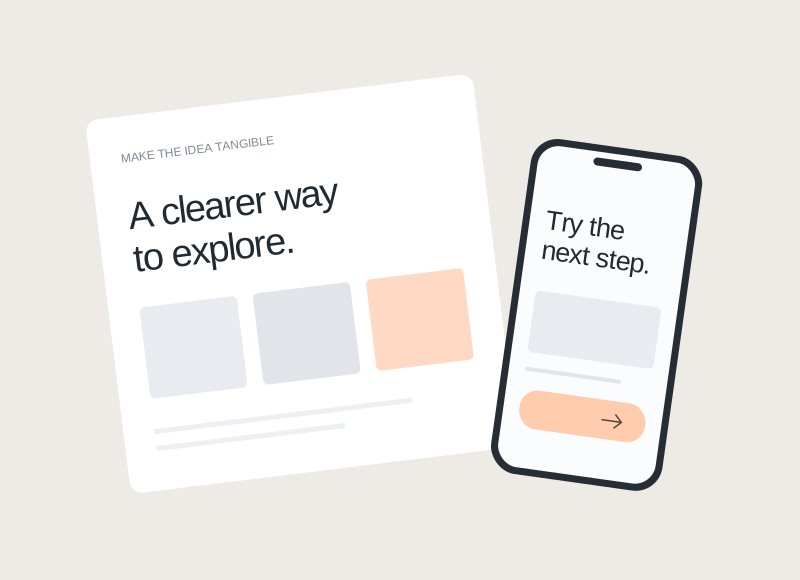
A prototype and a working product do different jobs. The right next step depends on the uncertainty in front of you: the experience, the technology, or whether the idea is worth pursuing.
Use a prototype to explore the experience
A clickable prototype is useful when you need to make a journey tangible. It can help people react to the order of screens, the language, and the decisions an interface asks them to make. It is especially helpful when a team is discussing the same idea but imagining different products.
Be clear about what the prototype cannot prove
A screen can demonstrate an interaction without proving that the underlying system will work. A prototype does not, by itself, validate an integration, data migration, or demanding technical requirement. Those questions may need a small technical experiment alongside the design work.
Build a thin slice when the uncertainty is technical
If the main question is whether a real workflow can connect the required systems, a focused working slice may be more useful than more screens. Keep that experiment bounded. Choose one journey, identify the technical question, and decide what evidence would help you move forward.
Give the review a purpose
Whether you are testing a prototype or a working slice, avoid a general request for opinions. Ask someone to complete a task, explain what they expect to happen, or point out where they become uncertain. Listen for misunderstandings and observe the steps that cause friction.
Know when to move on
A prototype is a tool for making decisions. When the important journeys are understood and the remaining questions are specific enough to resolve in development, agree the first build scope. Carry the design decisions forward, and keep room to learn from the working product.