




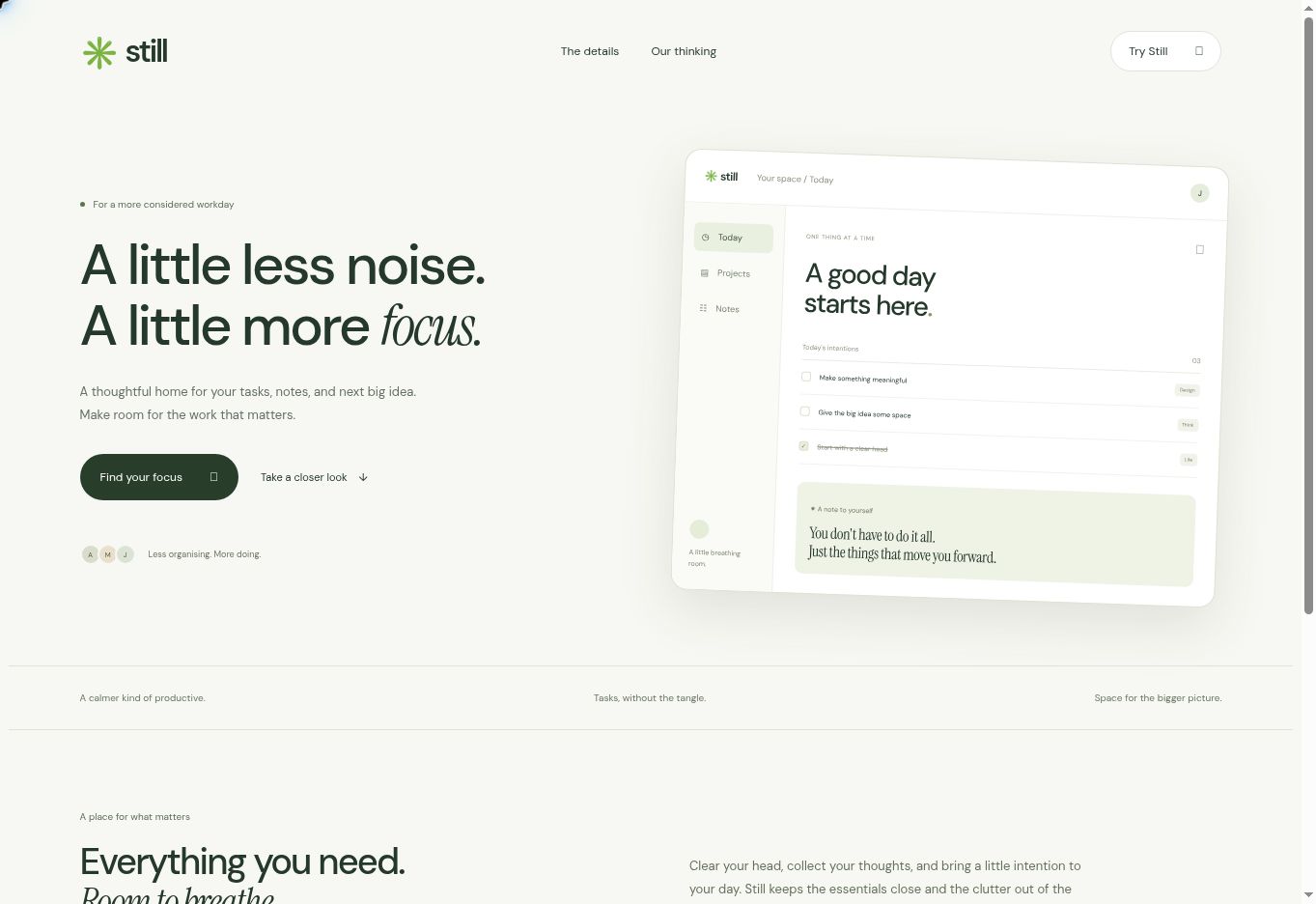
Still a little less noise.
A calm workspace website with a task list and scratchpad you can try.

When your website undersells your business, or everyday work depends on spreadsheets and workarounds, we design and build what needs to change.
Start with the problem you keep working around. Choose the one that is holding up your next move.
A clearer offer, relevant evidence, and a straightforward enquiry path.
Choose one complete user task before reaching for the whole roadmap.
Connect the task, the information, and the person responsible.
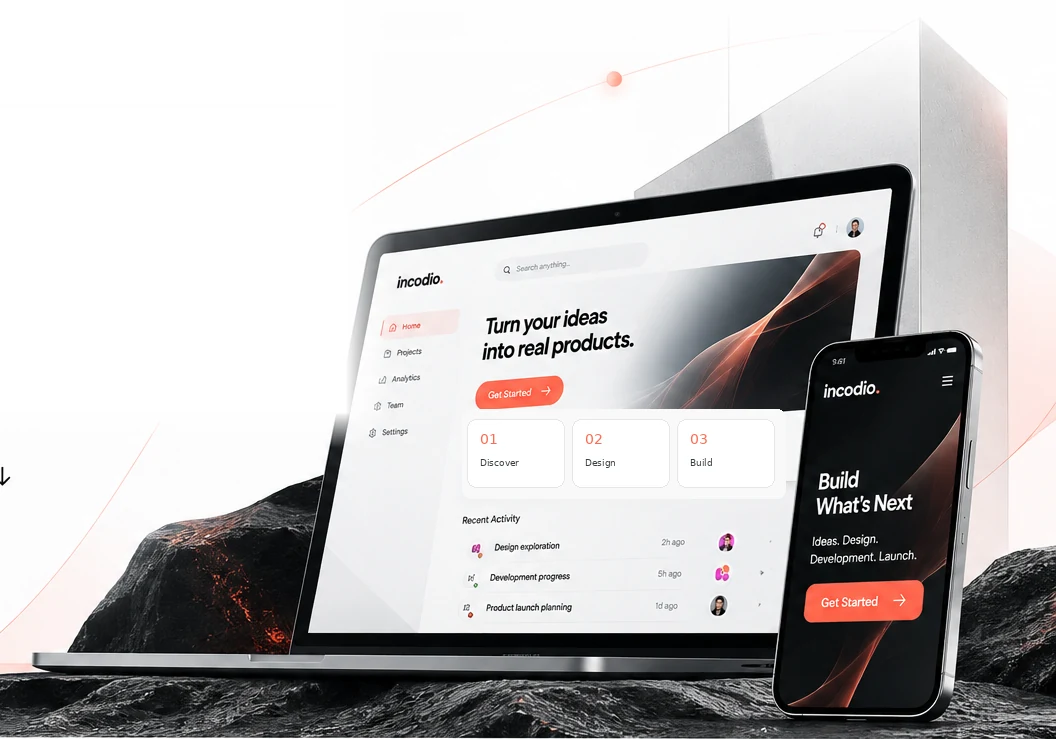
Incodio helps founders launch their first product, businesses build a stronger digital presence, and teams create software that makes work simpler.
Bring the product direction, user experience, and development into one project.
Start with the task. Find the service that fits.
Not sure which service fits?
Help the right visitors understand why your business fits.
Connect the journey through to a usable outcome.
Give repeated manual work a more direct route.
Browse Still, follow Outline's portfolio journey, or try Daylight's mobile interactions. Explore the design and the working details.
The right starting point changes with your business. A founder, an established company, and an internal product team need different kinds of help.
For product leaders with a live product and work their team cannot take on right now. Discuss a feature, UX improvement, or release.
Work from the idea, sketches, or early feedback you have already collected.
Make your offer easier to understand, give requests a place to go, or improve a process your team repeats every day.
Start with a website, shared portal, or process-specific tool. Your existing systems are part of the conversation.
Bring the feature, design, or user journey that needs work. We review the existing product before proposing a contribution.
Bring your backlog, existing designs, or product requirements. We will work out whether the contribution fits.
See how the project moves from the first conversation to launch, with specific work to review at each stage.
Follow the processWe explore who will use the product, what they want to accomplish, and how they move through the experience. Then we bring those pieces together into a clear direction for the first version.
Confirm the outcome and the boundaries.
Next: designWe map the main journey and design the important screens. A prototype helps resolve the interactions that need closer review.
Review the task, the content, and the experience.
Next: buildWe develop the agreed functionality and share working previews. You can try the task and give feedback while the product takes shape.
Try the journey and consolidate feedback.
Next: launchWe complete the agreed checks and handover materials. Access, third-party costs, and any follow-on work are made explicit.
Confirm readiness and ongoing responsibilities.
Ways to work togetherStart with discovery, commission a defined project, or discuss ongoing work. Agree the commitment before moving into the next phase.
Use discovery to clarify what is worth building and what the work would involve.
You need a decision before you need development.
Commission a website, MVP, or feature with agreed deliverables, review points, and a handover.
You are ready to commission a specific piece of work.
Plan a continuing queue of design and development work around the product you already have.
You have recurring work and want to discuss capacity.
Short reads to help you ask better questions, define the first release, and prepare a useful brief.
Explore the blog
Choose the next step around what you need to learn, rather than how finished the idea looks.
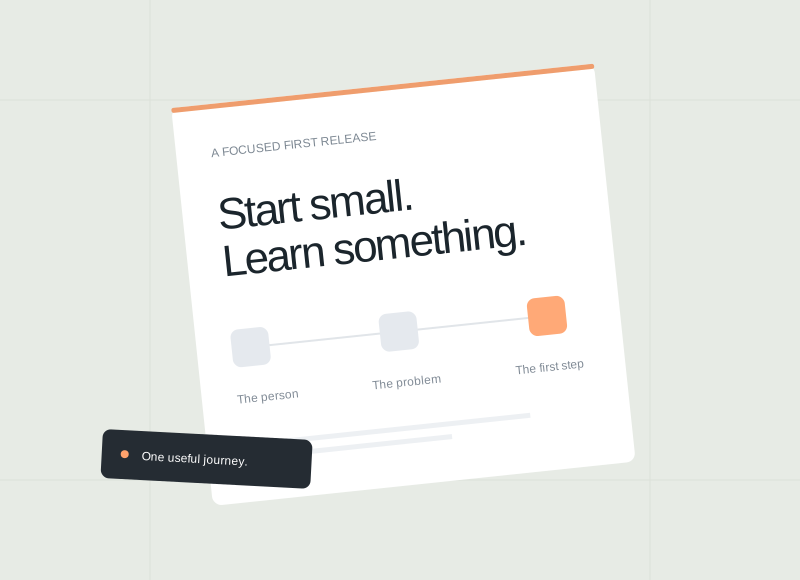
A practical way to separate the essential first release from everything that can wait.
A clearer page begins with what the buyer needs to understand before taking the next step.